Your chimney is one of the most visible parts of your home, but one of the most important parts is hidden inside it. That part is the chimney flue, and understanding it can help you use your fireplace more safely, spot problems earlier and make better decisions about repairs.
Here’s what a flue is, how it works, what it’s made of and why it deserves attention before the heating season gets going.
What Is a Chimney Flue?
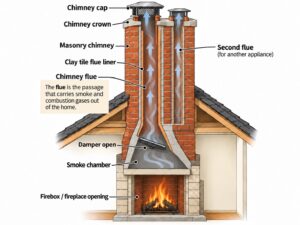
A chimney flue is the passage inside your chimney that carries smoke, and hot combustion gases from your fireplace, furnace or other appliance up and out of your home.
Think of the chimney as the structure (the brick column you see on your roof) and the flue as the channel running through the middle of it. A single chimney can contain one flue or several, and each one is a separate path for exhaust.
Flue vs. Chimney vs. Damper: What’s the Difference?
These three terms often get mixed up, so here’s a quick breakdown:
- Chimney: The whole structure, usually brick or masonry, that runs from your fireplace or appliance up through the roof.
- Flue: The open channel inside the chimney that exhaust travels through.
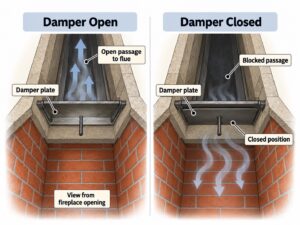
- Damper: The metal plate that opens and closes the flue, either just above the fireplace or at the top of the chimney.
When someone tells you to “open the flue,” they really mean open the damper. If you’re not sure how yours works, see our guide on how to open and close your flue.
How Does a Chimney Flue Work?
A flue works on a simple principle: hot air rises. When a fire burns, the hot gases it produces are lighter than the cooler air around them, so they rise up the flue and out the top of the chimney. As they rise, they pull fresh air into the fireplace to feed the fire. This upward pull is called draft.
A good draft depends on a few things:
- The right size. A flue that’s too small can’t move enough smoke. One that’s too large lets the gases cool before they reach the top, which weakens the draft.
- The right height. Taller chimneys generally draw better, and the top needs to clear the roofline and nearby structures.
- A clear path. Creosote buildup, nests, fallen debris or a collapsed liner all restrict airflow.
- A warm flue. On very cold days, a column of cold air can sit in the flue and push smoke back into the room until the flue warms up.
When any of these are off, you’ll usually notice smoke in the room, a fire that’s hard to keep going or a smell from the fireplace.
What Are Chimney Flues Made Of?
The inside of a flue is protected by a flue liner. The liner contains hot corrosive gases so they don’t damage the surrounding brick or reach the wood framing of your home. Common types include:
Clay tile liners
Clay is the most common liner in masonry chimneys. Square or rectangular clay tiles are stacked and mortared together inside the chimney. They’re durable and inexpensive, but they can crack from a chimney fire, from settling or from years of freeze-thaw cycles, and the mortar joints between them can wear out. A clay liner in good condition, swept and inspected every year, can serve safely for decades.
Stainless steel liners
These are flexible or rigid stainless steel pipe installed inside the existing chimney. They are often used to reline a damaged clay flue if it has been badly damaged or to properly vent a new furnace, water heater, wood stove or insert. They’re sized to match the appliance, which improves draft and safety.
Unlined chimneys
Many older Toronto homes, especially those built before the mid-1900s, have chimneys with no liner at all, just bare brick. Unlined flues are more vulnerable to heat damage and corrosion and are harder to keep safe. If you own an older home and aren’t sure whether your chimney is lined, it’s worth finding out. Our article on whether you need a chimney liner goes into more detail.
What Does a Chimney Flue Look Like?
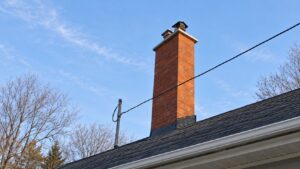
From the roof, you can often see the top of each flue sticking up slightly above the chimney crown (the concrete cap covering the top of the chimney). A clay flue looks like a square or rectangular terracotta tile. A stainless steel or aluminum liner looks like a round metal pipe, often with a cap on top.
From inside the fireplace, if you open the damper and shine a flashlight upward, you’re looking into the flue. You may see black soot or creosote on the walls, which is normal to a point. Heavy, shiny or crusty buildup warrants a professional inspection and cleaning.
Why Does My Chimney Have 2 or 3 Flues?
If you look at your chimney from the roof and see more than one flue tile, don’t worry. It’s very common. Each flue usually serves a different appliance. For example:
- One flue for a wood-burning fireplace
- One flue for a furnace or boiler and/or hot water heater
- A second fireplace on another floor
Each appliance generally needs its own flue so exhaust from one doesn’t interfere with another or get pushed back into the house.Certain gas appliances can share a properly designed venting system.
Some flues may no longer be in use. That often happens in Toronto homes that have switched to a high-efficiency furnace, which vents out the side of the house through a plastic pipe instead of the chimney. An unused flue should be protected from rain, snow and animals while maintaining adequate ventilation. Completely sealing it off can trap moisture, leading to deterioration of the brick and mortar, particularly during winter freeze-thaw cycles. Here’s why you should never seal your chimney at the top.
Can a Fireplace Share a Flue with a Furnace?
No. A wood-burning fireplace should have its own dedicated flue, and building codes in Ontario generally require it. Sharing a flue can cause poor draft for both appliances and create a real risk of carbon monoxide entering your home.
This also comes up after a furnace upgrade. When a furnace stops using the chimney but a water heater still vents into it, the flue can end up oversized for the smaller appliance. The exhaust cools too quickly, moisture condenses inside the flue and the liner and brick can deteriorate. In that situation, a properly sized chimney liner for the new appliance is usually the fix.
Signs Your Chimney Flue Needs Attention
Because the flue is hidden, problems often go unnoticed until they’re serious. Watch for:
- Smoke continues to enter the room after the fire is established, even with the damper fully open
- Pieces of clay tile or mortar falling into the firebox
- A strong, smoky or musty smell from the fireplace, especially in humid weather
- A smell in an upstairs space coming out of an attic opening or exhaust vent.
- White staining (efflorescence) or crumbling brick on the outside of the chimney
- Water stains on walls or ceilings near the chimney
- Heavy creosote buildup, or a past chimney fire
- A new furnace or water heater that was connected to an old flue
It is strongly advised not to continue to use a fireplace that spills smoke back into the room after it has warmed up, but to have it inspected.
How Often Should a Flue Be Checked?
We recommend having your chimney swept and inspected once a year, ideally in the spring after you’ve finished using the fireplace for the season or in the fall before you start using it.
Ontario Fire Code section 2.6.1.4 requires inspections at intervals no greater than 12 months, when an appliance is added and following a chimney fire. Section 2.6.1.5 requires cleaning as often as necessary.
Skipping it lets small problems grow, as we explain in what happens if you skip your annual chimney inspection. A WETT inspection examines your wood-burning system and the accessible parts of the chimney and flue. If there are signs of damage or other concerns, a more detailed inspection, potentially including a camera examination, may be recommended.
Not Sure What Shape Your Flue Is In?
A1 Quality Chimney has been caring for chimneys across Toronto, Mississauga, Vaughan, Markham and Brampton for over 40 years. Our WETT-certified technicians can inspect your flue, sweep it clean and recommend honest next steps, whether that’s a simple cleaning, a cap or a new liner.
Call A1 Quality Chimney at (416) 231-6560 or book online to schedule your WETT inspection before the heating season.