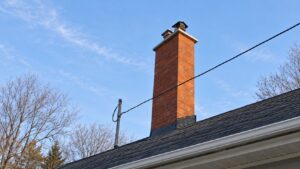
A chimney is easy to ignore. It sits quietly on the roofline for 6-8 months of the year, and unless something is visibly wrong, like smoke in the room, a strange smell, or a brick on the lawn, most homeowners never think about what’s happening inside the flue. That’s exactly the problem. The risks that build up from skipping an annual inspection aren’t the kind you can see from your living room, and by the time they are visible, they’re often expensive, or dangerous, or both.
In Ontario, annual chimney inspection isn’t just a recommendation. The Ontario Fire Code requires chimneys, flues and flue pipes to be inspected for dangerous conditions at intervals of no more than 12 months.
Here’s what’s actually at stake when a chimney goes a year (or several) without a professional look.
The Fire Risk: Creosote Doesn’t Go Away on Its Own
Every time you burn wood, the smoke leaves behind a residue called creosote on the inside walls of your flue. Left unchecked, it builds up in three stages:
- Stage 1: light, flaky, and easy to brush away
- Stage 2: a harder, tar-like layer that needs proper sweeping tools to remove
- Stage 3: a dense, glazed coating that’s highly flammable and difficult to remove, even for professionals
Why it matters:
- A chimney fire fueled by heavy creosote buildup can produce flue-gas temperatures around 2,000°F.
- That sudden, intense heat can thermally shock clay flue tiles, causing them to crack or fail.
- Once a liner is damaged, heat and combustion gases can reach areas of the chimney system they were never intended to reach, increasing the risk of structural damage or a house fire.
- Annual inspection, with sweeping when needed, helps catch and remove dangerous creosote buildup before it becomes a serious fire hazard. t
The Carbon Monoxide Risk: The One You Can’t See or Smell
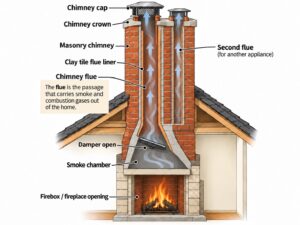
A chimney’s job isn’t just to let smoke out. It’s the pathway that carries combustion gases, including carbon monoxide, safely out of your home, and that only works if the flue is clear and intact.
What can go wrong:
- A blocked flue can interfere with proper draft and cause combustion gases to spill back into the home. Cracks or gaps in the venting system can also allow gases to escape where they shouldn’t.
- Over 65% of carbon monoxide-related injuries and deaths in Ontario happen inside the home
- CO is invisible, odorless, and tasteless, which is why it’s often called “the silent killer”
- Ontario’s Fire Code now requires CO alarms in any home with a fireplace or fuel-burning appliance
- A working alarm is essential, but it’s a backstop. It tells you there’s a problem after the fact
- A chimney inspection can identify blockages, deterioration, and venting problems before they turn into a more serious safety issue.
The Damage You Don’t Notice Until It’s Expensive
Not every consequence of a skipped inspection is dramatic. A lot of it happens slowly and stays hidden until it doesn’t:
- Moisture gets into small cracks in the masonry, freezes and expands over a Toronto winter, and turns a hairline crack into crumbling mortar or spalling brick
- A damaged liner that goes unnoticed can allow heat transfer to nearby combustible framing
- What starts as a minor issue in year one can become a much larger repair bill two or three years later
- Problems may also surface during a WETT inspection requested for a home sale, purchase, or insurance coverage. Many insurers and buyers want documentation showing that a wood-burning system has been inspected and is in acceptable condition.
What an Inspection Actually Catches
A proper annual inspection checks the things you can’t see from inside your house:
- Creosote level and buildup stage
- Condition of the liner
- Cracks or gaps in the masonry
- State of the damper and chimney cap
- Animal or debris blockages
- Visible signs of draft or venting problems
Many chimney problems are easier and less expensive to address when caught early, before deterioration spreads.
A chimney that’s inspected every year is one less thing to worry about when heating season begins. Skipping inspections means small problems can remain hidden until they become larger ones.
Frequently Asked Questions
How often should a chimney be inspected? In Ontario, the Fire Code requires every chimney, flue and flue pipe to be inspected for dangerous conditions at intervals of no more than 12 months. An inspection is also required when an appliance is added and after a chimney fire. Having it done right after the heating season or before the season starts is a practical time to identify problems before regular fireplace use begins.
Can a dirty or blocked chimney really cause carbon monoxide poisoning? Yes. If a chimney is blocked or damaged, combustion gases, including carbon monoxide, can be pushed back into the home instead of venting outside. Carbon monoxide is more likely to be unnoticed when it come from a gas appliance.
Do gas fireplaces need chimney inspections too, or is that just for wood-burning ones? Yes. Gas fireplaces don’t produce creosote, but the fireplace and its venting system still need periodic inspection for blockages, corrosion, deterioration, or disconnected components.
What is creosote and why is it dangerous? Creosote is a residue left behind by burning wood that builds up inside the flue over time. In its later stages, it becomes dense, glazed and highly flammable, creating a serious chimney-fire hazard.
Is a chimney inspection required to sell a home or for insurance in Ontario? It’s often requested. Many insurers and buyers ask for a WETT inspection report as proof the fireplace and chimney have been properly maintained.
What’s the difference between a chimney sweep and a chimney inspection? A sweep cleans out creosote, soot, and debris. An inspection checks the condition of the liner, masonry, damper, cap, and draft to catch problems. Most of the time, we perform a cleaning and inspection at the same time.
Contact A1 Quality Chimney for reliable chimney maintenance, cleaning, repairs, and more. Call (416) 231-6560 or reach out to us online.
About A1 Quality Chimney
A1 Quality Chimney has been cleaning, inspecting, and repairing chimneys across Toronto and the GTA for more than 45 years, serving over 60,000 customers along the way. A1’s inspectors, sweeps and technicians include WETT-certified professionals and the company is TSSA licensed, holds an A+ rating with the Better Business Bureau, and works throughout Etobicoke, York, North York, East York, Scarborough, Mississauga, Brampton, Vaughan, Thornhill, and Markham. Services include chimney sweeping, WETT and general inspections, chimney and liner repairs, masonry work, chimney caps and dampers, and maintenance for condo and multi-residential buildings.